


Pinochle
4.5396.00 Reviews
App Specs
- Version
- 2.2
- Updated On
- License
- Free
- Downloads
- 100,000+
- Developer
- Topy Games
- Categories
- Card
- Platform
- Android
Screenshots
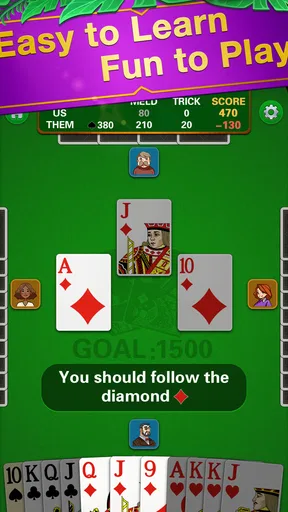
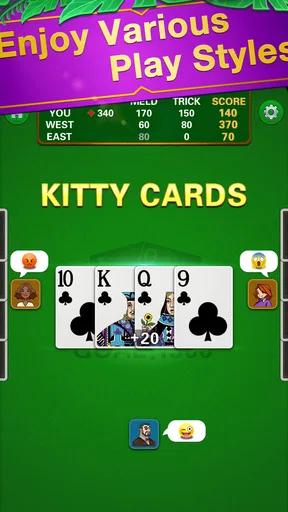
 Analysis by AppCompare
I came away from Pinochle with the feeling that it understands what makes a traditional card game enjoyable: the rules create tension, but the pleasure comes from reading the table, remembering what has been played, and deciding when a safe move is actually the wrong move. Topy Games presents it as a multiplayer card game that works online or offline, and that combination is the main reason I would recommend trying it. It is not chasing the noisy pace of a modern action game. Instead, it gives you a focused way to play pinochle when you have a few quiet minutes, a reliable internet connection, or no connection at all.
The game is free to download, which makes it easy to test without committing money first. It is listed for Everyone 10+ and runs on Android 7.0 or later. I also noticed that it has built a healthy audience, with more than one hundred thousand installs and a 4.5 average from roughly one and a half thousand ratings. Those figures do not automatically make a card game good, but they fit my experience: this feels like a straightforward, approachable digital version of a familiar pastime rather than an overloaded collection of unrelated modes.
Why the core card experience works
The best part of this release is its balance between concentration and convenience. Pinochle is a game where every card can change the value of a later decision. You are not merely trying to win the current trick; you are also thinking about what your hand suggests, what an opponent may be holding, and whether your present play reveals too much. That makes even a short session feel more substantial than a simple matching game.
I particularly like the way the offline option changes how I think about the app. A card game that requires a connection is less useful during travel, in a waiting room, or in a place with unreliable service. Here, I can treat it as a dependable solo activity rather than something that only works when the network cooperates. Online play has a different appeal, of course, because human opponents add unpredictability, but offline play gives the app a practical everyday role.
A realistic use case is a train journey where I want something more mentally engaging than scrolling through short videos. I can begin a hand, pause mentally between decisions, and return to the game without needing to set up a physical deck or find another player immediately. The same applies to a short break at home. I would not describe it as a replacement for an evening with friends around a table, but it is an effective substitute when the table is not available.
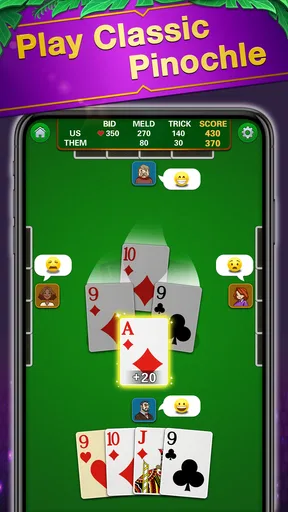
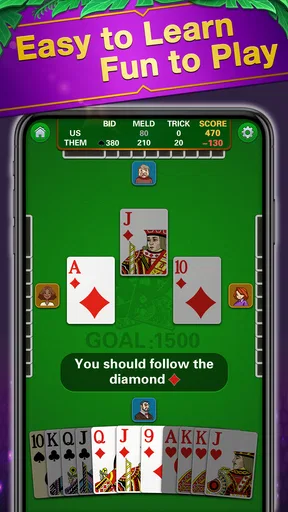
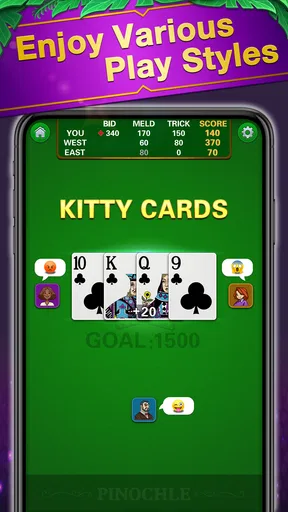
The interface benefits from keeping attention on the cards. That matters more in pinochle than it might in a casual solitaire title, because visual clutter can make it harder to track suits, possible combinations, and the order of play. I found that the game’s value comes less from decoration and more from presenting the next decision clearly. For a traditional card player, that restraint is welcome.
There is also a useful difference between learning the game digitally and learning it from a printed rule sheet. In an app, I can experiment without worrying about misdealing or losing track of the hand. That makes it friendlier to someone who remembers the name of pinochle but has forgotten the details. I would still advise new players to spend time understanding the scoring and bidding logic rather than rushing through hands, because the strategic layer is where the game becomes interesting.
Worth Reading Before You Choose

EA SPORTS FC Mobile 26 Is a Bigger Football Game, but It Takes Time

Flipboard Shows What News Apps Must Do Beyond the Feed

Switching to Android Auto Means Rethinking Your Driving Routine

Google Calendar Makes a Crowded Week Easier to Manage

Ludo King Makes the Most of the Minutes Between Plans

Baby Panda World Brings Quick Play to Modern Phones, but Its Game Library Feels Busy
Small decisions matter more than fast reactions
One of my strongest impressions is that this is a good choice for players who enjoy deliberate decisions. The game does not need lightning reactions. Instead, it rewards patience, memory, and the ability to judge risk. If you like card games where a modest advantage can be protected through careful play, you will probably find more to appreciate here than in a purely luck-driven title.
A practical tip is to avoid treating every attractive combination as an automatic reason to bid aggressively. A strong-looking hand can still become awkward if the rest of the cards do not support the plan. I found it more useful to consider what I could realistically control after the opening decisions, not just what looked impressive at first glance. That habit also makes the offline mode more valuable, since it gives me room to review mistakes without the pressure of another person waiting.
Another useful approach is to use offline sessions as a training ground for memory. Rather than playing every hand at full speed, I can pay attention to which suits have disappeared and which cards remain plausible. That is a more productive way to improve than simply repeating games and hoping better results arrive. The app does not need to turn this into a lesson system; the structure of pinochle already supplies the practice.
For experienced players, the appeal is not that the game reinvents the genre. It is that the familiar rules can be carried in a pocket and played in two different circumstances. The online mode supplies social competition, while the offline mode is better for practice, travel, or a quick solitary session. That division is simple, but it gives the app more flexibility than a version focused on only one type of play.
Where the experience feels less convincing
The biggest limitation is also connected to the game’s traditional character: pinochle is not universally familiar. Someone looking for instant, effortless entertainment may find the rules and scoring harder to absorb than those of games such as solitaire, snap, or basic trick-taking titles. The first few sessions can feel more like study than relaxation if you do not already know the structure.
That is not a flaw in pinochle itself, but it affects who will enjoy this particular app. I would not choose it for a person who wants constant visual stimulation, a large progression system, or a stream of quick rewards. Its satisfaction builds through understanding. If you dislike games that ask you to remember rules and think several plays ahead, the free price will not change that fundamental mismatch.
The online option can also raise expectations. Multiplayer card games are most enjoyable when opponents are available and the experience feels active. I would approach this app primarily as a flexible pinochle platform rather than assuming that online play alone will provide an endless social community at every moment. When I want guaranteed availability, offline play is the safer choice. When I want the unpredictability of another person, I would use the online side with the understanding that the experience depends on the current multiplayer situation.
There is another trade-off for returning players. A digital version is more convenient than a physical deck, but it removes some of the social rituals that make a real card table memorable: dealing the cards, discussing a disputed rule, and watching a friend reconsider a bid. Pinochle on a phone is cleaner and faster to start, yet it can feel more solitary even when the underlying game is designed for multiple players. That is why I see it as a companion to physical play, not a complete replacement for it.
The app includes optional in-app purchases priced at $1.99 per item. I appreciate that the base game is free to try, but anyone who prefers a completely purchase-free experience should keep that model in mind. I would begin with the free version and decide later whether any optional item genuinely improves my use of the game. For a traditional card title, paying should feel like a convenience choice, not something required before the basic experience becomes worthwhile.
How it compares with familiar card alternatives
Compared with solitaire, this game is less immediately relaxing but more rewarding for players who want decisions involving opponents and changing information. Solitaire works well when I want a private puzzle with a simple rhythm. Pinochle is better when I want to interpret a hand, manage risk, and think about another player’s likely plan.
Compared with lighter trick-taking games, it has a steeper learning curve and a more deliberate pace. A simpler trick-taking app may be the better pick for introducing card games to someone who wants to understand the rules in a few minutes. I would choose this one for a player who is willing to spend time learning the structure because the extra complexity gives each hand more personality.
Compared with playing with a physical deck, the app wins on setup and portability. There is no need to find a clear table, shuffle, deal, or locate a partner before starting an offline session. The physical version wins on atmosphere and face-to-face interaction. My preference depends on the situation: I would use the app for practice and convenience, then move to a real deck when the social side matters most.
It also compares favorably with card apps that try to include too many unrelated activities. The focused identity here is a strength. Topy Games has built the experience around pinochle rather than making the player navigate a broad arcade of card variants. That makes it easier to know what I am opening the app for, although it also means people seeking variety may eventually want another game alongside it.
Who will get the most from it
I think this is best suited to three kinds of players. First are people who already know pinochle and want a portable way to play. They can get to the decisions quickly and will probably value the choice between online and offline sessions most. Second are patient newcomers who enjoy learning traditional games and do not mind a few slower hands while the rules settle into place. Third are card-game fans looking for a thoughtful alternative to solitaire.
It is also useful for someone returning to the game after years away. I would use early sessions to rebuild familiarity instead of judging the app by immediate win rates. Pay attention to how bidding, combinations, and trick decisions connect. Once those relationships become clearer, the game feels less like a collection of rules and more like a conversation between the cards in your hand and the cards you expect to see later.
I would skip it if my priority were a fast arcade experience, a rich story, or a large range of card variants in one download. I would also recommend a simpler alternative for a child or casual player who wants to start playing without learning a traditional scoring system. The age rating of Everyone 10+ makes it broadly accessible, but accessibility in the store sense is not the same as instant understanding. The game still asks for attention.
Device compatibility is reasonably broad because the current version, 2.2, supports Android 7.0 and later. That makes it a practical option for people who do not use the newest phone. I would still keep the app updated when possible, especially if online play is important, because multiplayer experiences tend to benefit from staying on the current release.
My verdict after weighing convenience against depth
After spending time with it, I see Pinochle as a focused and worthwhile card game rather than a universal recommendation. Its strongest argument is the combination of a thoughtful traditional ruleset, online multiplayer, and offline availability. That combination lets me use it in more situations than a physical deck or a connection-dependent card app. It is free to start, and the 4.5 average across about one and a half thousand ratings suggests that many players find the same basic appeal.
Its weakness is not poor ambition; it is the nature of the game. Pinochle asks for patience, memory, and a willingness to learn. Players who want immediate simplicity may feel blocked by that depth, while experienced card players may wish for a stronger sense of social presence than a phone can provide. Those are important limitations, but they do not undermine the app’s central purpose.
My recommendation is clear: try it if you enjoy traditional card strategy, want a portable pinochle table, or need an offline game that rewards thought rather than reflexes. Start with relaxed practice, resist the urge to make every bold bid, and use offline hands to understand which decisions actually shape the result. If you are looking for a quick, flashy distraction, choose something lighter. If you want a compact way to return to a serious card game, Pinochle is a sensible free starting point.
Pros
- Supports classic Pinochle rules for an authentic card-game experience.
- Helpful hints make it easier for newcomers to learn bidding and melds.
- Quick rounds fit well into short breaks or casual play sessions.
- Card animations and clear layouts keep the table easy to follow.
- Offers a relaxing alternative to more action-focused mobile games.
Cons
- Rule variations may not match the version played in your local group.
- The computer opponents can feel predictable after extended play.
- Some features may require an internet connection or online services.
- Small card details may be difficult to read on compact phone screens.
- Players seeking a large competitive community may find matchmaking limited.
FAQs for Pinochle
What is Pinochle, and how is the game played?
Pinochle is a classic trick-taking card game usually played with a special 48-card deck, although some digital versions offer different rules and deck sizes. Players try to win valuable cards and combinations, known as melds, to score points. The app typically guides you through bidding, melding, trick-taking, and scoring, making it suitable for both beginners and experienced players.
Can beginners learn how to play Pinochle easily?
Yes, beginners can learn Pinochle with some patience, especially if the app includes tutorials, rule explanations, or practice matches against computer opponents. The game has several concepts to understand, including bidding, trump selection, card combinations, and strategic trick-taking. It may feel complicated at first, but guided gameplay and repeated rounds make the rules much easier to follow.
Does the Pinochle app support single-player and multiplayer modes?
Most Pinochle apps provide a single-player mode where you compete against artificial intelligence, which is useful for practicing strategies and learning the scoring system. Depending on the specific version, online multiplayer, private tables, or local play may also be available. Before downloading, check whether the app supports the type of competition you prefer and whether an internet connection is required.
Is an internet connection required to play Pinochle?
An internet connection may not be necessary for every feature. Many Pinochle apps allow offline games against computer opponents, so you can play while traveling or when mobile data is unavailable. However, online multiplayer, advertisements, account synchronization, leaderboards, and certain updates may require internet access. Availability can vary between Android and iOS versions, so review the app listing carefully.
Does Pinochle contain advertisements or in-app purchases?
Some Pinochle apps are free to download but support themselves with advertisements, while others offer paid upgrades or subscriptions. In-app purchases may remove ads, unlock additional card designs, provide advanced statistics, or enable extra game modes. Check the store description and purchase details before installing, particularly if you want a completely ad-free experience or prefer not to spend money inside the app.


